

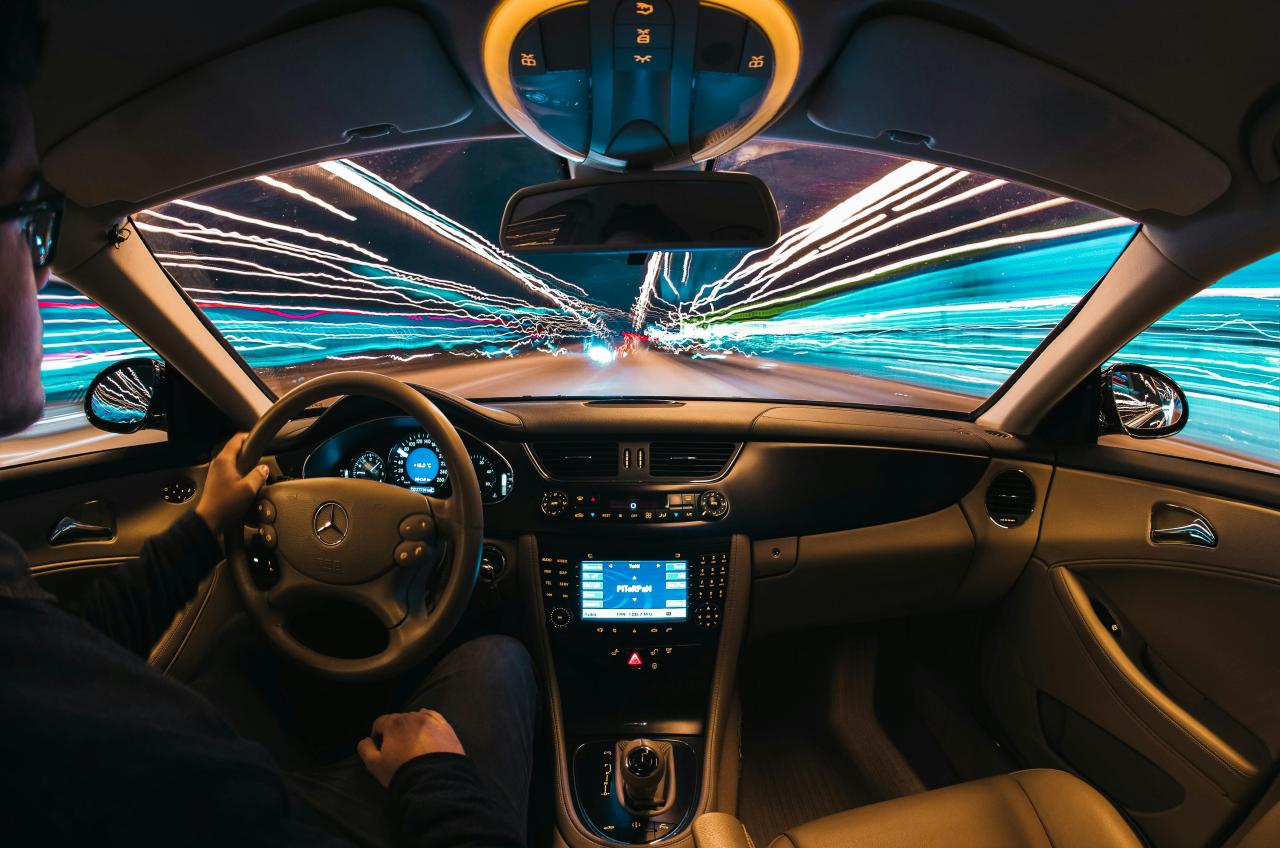
The way we interact with our vehicles is undergoing a massive revolution thanks to the integration of Augmented Reality Head-Up Displays or AR HUDs. For decades, drivers had to glance down at a physical dashboard or a central screen to check their speed or follow navigation instructions.
This split-second distraction often increased the risk of accidents, especially during high-speed travel or in complex urban environments. However, the emergence of AR technology now allows critical information to float directly in the driver’s line of sight, blending seamlessly with the real world outside the windshield.
Imagine seeing your navigation arrows painted directly onto the actual road lanes or receiving a warning highlight around a pedestrian who is about to step into traffic. This digital layer acts as a futuristic co-pilot that enhances your situational awareness without requiring you to take your eyes off the pavement.
As car manufacturers push toward a more connected and autonomous future, these displays serve as the primary interface between the human brain and the vehicle’s intelligent sensors.
We are moving away from traditional dials and entering an era where data and reality become one. This article explores the specific benefits of this technology and how it transforms every journey into a safer and more intuitive experience.
Enhanced Situational Awareness and Driver Safety

The most significant benefit of an AR HUD is the massive improvement in safety it provides by keeping the driver’s focus exactly where it needs to be. By projecting data at a perceived distance that matches the road ahead, the human eye does not need to refocus its lens between a close-up screen and a distant horizon.
This reduces eye strain and ensures that you remain fully aware of your surroundings at all times. The system can highlight hazards that might be invisible to the naked eye during night driving or in poor weather conditions.
A. Real-Time Hazard Highlighting
Advanced sensors identify potential threats like a car braking suddenly two vehicles ahead or a cyclist in your blind spot. The AR HUD can draw a glowing box or a warning icon directly over these objects to alert you instantly.
From my perspective, this solves the “reaction gap” problem because it gives your brain a visual cue exactly where the danger exists, rather than just a generic beep from the dashboard.
B. Night Vision and Fog Assistance
Using infrared cameras and thermal sensors, the display can project the outlines of the road or living beings even when visibility is near zero.
It essentially gives you “superhuman” vision that cuts through the dark and the mist. I believe this is a game-changer for people who live in rural areas where deer or other animals frequently jump into the road without warning.
C. Blind Spot Visual Integration
Instead of just a small light in your side mirror, an AR HUD can project a visual ghost of the car in your blind spot onto the windshield.
This makes it impossible to miss a vehicle during a lane change because the information is right in front of your face. This helps solve the reader’s problem of “mirror anxiety” and makes merging into fast-moving highway traffic much more comfortable.
D. Lane Departure Warning Visuals
If you begin to drift out of your lane without a turn signal, the display can make the actual lane markings on the road glow red. This physical-looking warning is much more effective than a vibrating steering wheel because it shows you exactly which direction you are drifting.
My take is that this intuitive feedback loop creates safer driving habits over time without feeling like the car is “nagging” the driver.
Seamless Navigation and Urban Maneuvering
Navigating a complex city with multiple turn-offs and high-rise buildings can be incredibly stressful when using a traditional 2D map. AR HUDs transform this experience by projecting “virtual arrows” that appear to sit directly on the asphalt of the turn you need to take.
This removes the guesswork and the “mental mapping” required to translate a small screen into a real-world intersection. You simply follow the blue line painted on the ground through the windshield.
A. Virtual Lane Guidance
In multi-lane highways or complex interchanges, the system can highlight the exact lane you need to be in well before the exit appears.
This prevents last-minute lane changes and “missed turn” frustration that often leads to dangerous driving maneuvers. I see this as the ultimate solution for “city driving stress,” allowing you to navigate unfamiliar territory with the confidence of a local.
B. Point of Interest Identification
As you drive past restaurants, gas stations, or your saved destinations, the AR HUD can place a digital pin over the actual building.
This makes finding your destination in a crowded street much easier, especially when building numbers are hard to see. From my view, this bridges the gap between digital searching and physical finding, making the car a much more helpful assistant.
C. Dynamic Distance Indicators
The system can project a line on the road showing you the safe following distance from the car in front, which changes dynamically based on your speed.
If you get too close, the line turns red and moves closer to your windshield to encourage you to slow down. I believe this provides a constant, non-intrusive education on tailgating, which is one of the leading causes of rear-end collisions.
D. Intersection Safety Overlays
When approaching a busy intersection, the AR HUD can track the cross-traffic and signal when it is truly safe to turn. It can even show the “countdowns” for traffic lights that are connected to the city’s smart infrastructure.
This helps solve the problem of “anticipation errors,” ensuring that you only move when the path is completely clear and the light is in your favor.
Reduced Cognitive Load and Driver Fatigue
Long-distance travel often leads to mental exhaustion because the brain is constantly processing multiple streams of information from different sources. An AR HUD simplifies this by organizing the most important data into a single, easy-to-digest visual plane.
By reducing the number of times you have to look away from the road, the car lowers your cognitive load and helps you stay fresh for longer periods. This technology turns a high-stress task into a more relaxed and observational experience.
A. Minimalist Data Layering
The system only shows the information you need at that specific moment, such as your speed and the next turn. It hides secondary information like fuel levels or radio stations until you actually need to see them or when a warning is required.
My perspective is that this “less is more” approach solves the “screen clutter” problem that many modern cars suffer from today.
B. Eye Focus Harmonization
Since the AR images are projected at an infinite focal point, your eyes stay relaxed and focused on the distance. You no longer have to perform the “focal jump” between the road at 100 meters and a screen at 50 centimeters. I believe this significantly reduces the physical headaches and eye strain that often accompany long night drives.
C. Stress Reduction in Heavy Traffic
In “stop-and-go” traffic, the AR HUD can show you the status of the cars ahead and the expected time until traffic starts moving again.
This level of transparency helps the driver stay calm and patient because they have a better understanding of the situation. This helps solve the reader’s problem of “traffic rage” by providing a sense of control and predictability in a chaotic environment.
D. Natural Language Integration
When paired with voice assistants, the AR HUD can show visual confirmations of your voice commands, such as “Temperature set to 22°C.”
This visual feedback ensures that the car understood you correctly without you having to look at a central console to verify the setting. From my view, this creates a much more natural “dialogue” between the human and the machine.
The Future of Connected and Autonomous Travel
As we move toward higher levels of vehicle autonomy, the AR HUD will become the primary way the car “communicates” its intentions to the human passengers. If the car is driving itself, the HUD can show you exactly what the AI is seeing and why it is making certain decisions.
This builds trust between the passenger and the automated system, as you can see the “digital path” the car plans to take. Eventually, these displays will transform the entire windshield into a screen for entertainment and communication.
A. Visualization of AI Perception
When the car is in self-driving mode, it can highlight the cars and objects it is currently tracking. This allows the human to verify that the car is aware of that merging truck or the pedestrian on the sidewalk.
I think this transparency is the most important factor in the widespread adoption of self-driving technology because it removes the “black box” mystery of AI.
B. Shared Experiences for Passengers
Future AR HUDs will allow passengers to see different layers of information, such as historical facts about the landmarks they are passing.
You could look at a modern city and see a “digital overlay” of how it looked a hundred years ago. My take is that this turns the car into a mobile education and entertainment center, making every trip a learning opportunity.
C. V2X (Vehicle to Everything) Visuals
The display can show warnings about road work or accidents that are miles ahead, sent directly from other vehicles or smart road signs.
You might see a “warning cloud” on the horizon indicating a slippery patch of road that the car’s network just detected. This solves the problem of “unseen hazards,” giving you a massive head start to prepare for changing road conditions.
D. Seamless Office Integration
For the busy professional, the AR HUD can show incoming video calls or important calendar alerts in a safe, non-distracting way.
You can participate in a meeting while the car handles the highway driving, with the “heads-up” display keeping you connected to your work. From my perspective, this represents the ultimate evolution of the “mobile office,” where travel time becomes productive time.
Conclusion

Technology changes how we drive. The AR HUD is a shield. It keeps your eyes on road. Safety is the most important thing. You see everything in one view. The arrows show you the way. No more looking down at maps. The car helps you stay focused.
Night driving is much easier now. Sensors see what eyes cannot see. The display highlights the hidden danger. You feel safe in every weather. Urban streets are not scary today. The virtual lines guide your turn. You find every house very fast.
Stress goes away with this tool. Your eyes stay very relaxed now. No more jumping between different screens. The brain works in a calm. Long trips feel very short today. Future cars will talk to you.
They show you what they see. Trust the AI with your life. The windshield is the new screen. Connected roads make travel better now. Every car shares the secret news. You know the path is clear. Enjoy the journey with your tech. The road is a digital world. Reality and data are now one. Modern HUDs are the best choice. Go and see the future today.

